





Guidelines for Daily Maintenance and Troubleshooting of Gear Pumps
2025-12-24 12:16:46
The maintenance of gear pumps focuses on regular inspections, timely servicing, and operational condition control, with the core being cleanliness, adequate lubrication, prevention of dry running, and precise installation.
Overview of Gear Pump Maintenance Cycles and Key Points
Routine inspection (conducted daily)
This is the foundation for identifying issues and preventing minor faults from escalating into major problems.
Monitor the operational status: Check the pressure gauge and flow meter to ensure stable readings within the rated range.
Listening and Touching:
Check fastening and alignment: Check and tighten bolts that may be loose. Check the coupling to ensure that the coaxiality deviation between the pump and motor is ≤ 0.1mm, in order to reduce vibration and shaft seal wear.
monthly
Check the oil level, color, and cleanliness of the lubricating oil (or hydraulic oil). If the oil turns black or contains impurities such as metal shavings, it must be replaced immediately. Be sure to use recommended oils with appropriate viscosity.
Check the filter and safety valve: Clean or replace the filter mesh (usually 100-200 mesh) on the oil inlet pipeline to prevent blockage. Check the safety valve to ensure its flexible and effective adjustment.
Every 3-6 months (deep maintenance)
Disassembly, cleaning, and inspection: This is the most important maintenance step. It is necessary to disassemble the pump body and thoroughly clean all components such as gears, bearings, and pump casing.
Check and replace worn parts:
Check the gear: Check for severe wear, pitting, or burrs on the tooth surface, and if necessary, polish or replace it.
Check clearance: Measure and adjust the clearance between the gear end face (usually 0.025-0.04mm) and the clearance between the tooth tip and the pump body (usually 0.13-0.16mm). A gap that is too large can lead to internal leakage and decreased efficiency, while a gap that is too small may cause jamming.
Replace bearings and seals: Replace all aged bearings and seals (such as O-rings and shaft seals).
Key operational precautions
Correct usage habits can fundamentally reduce malfunctions.
Strictly prohibit idling: Before starting, it is necessary to ensure that the pump chamber is filled with the conveyed medium (such as oil or water). Running dry for several tens of seconds may cause gears and bearings to burn out due to dry friction.
Correct start stop:
Start: First open the inlet valve, jog the motor to confirm the correct direction of rotation, and then officially start.
Shutdown: The outlet valve should be closed first, and then the power should be cut off to prevent medium backflow or water hammer impact.
Control operating conditions: Ensure that the outlet pressure does not exceed the rated pressure of the pump, and protection can be set through the system overflow valve. Avoid prolonged operation under overpressure or overheating.
Long term shutdown maintenance
medium inside the pump. If the medium being transported is prone to solidification or corrosion, clean liquid (such as light oil or water) should be used to flush the inside of the pump chamber.
2. Rust prevention treatment: Apply a layer of rust proof grease on all metal processing surfaces (such as gears and shafts).
3. Proper storage: Place the pump in a dry and clean environment. If the inlet and outlet pipelines are disassembled, blind plates should be used to seal the interfaces to prevent foreign objects from entering.
4. Check before reactivation: Before reactivation, manual turning must be performed to check whether the rotation is flexible and free of jamming, and to check the status of all fasteners and seals.
Common faults and troubleshooting
When there is a problem with the pump, the following steps can be taken to quickly troubleshoot:
Insufficient flow or no liquid output
Possible reasons: Air leakage in the oil suction pipeline, clogged filter, high suction height, and severe gear wear.
Response measures: Check and tighten all suction side connectors; Clean or replace the filter element; Check the clearance between the gear and the pump body.
Abnormal vibration or loud noise
Possible reasons: poor alignment of the coupling, worn bearings, air or foreign objects entering the pump, poor gear engagement.
Response measures: recalibrate the concentricity of the coupling; Check and replace bearings; Exhaust and check the sealing of the suction pipeline.
Serious leakage
Possible reasons: aging or wear of the shaft seal (oil seal), damage to the sealing gasket, and loose connecting bolts.
Response measures: prioritize inspection and replacement of shaft seals; Tighten the bolts or replace the sealing gasket.
The temperature of the pump body is too high
Possible reasons: Insufficient internal clearance, intensified friction, insufficient or deteriorated lubricating oil, damaged bearings, long-term overpressure operation.
Response measures: Check and adjust the gap; Replace with qualified lubricating oil; Check the condition of the bearings; Check the system pressure. In order to make the gear pump work better, daily maintenance is crucial.
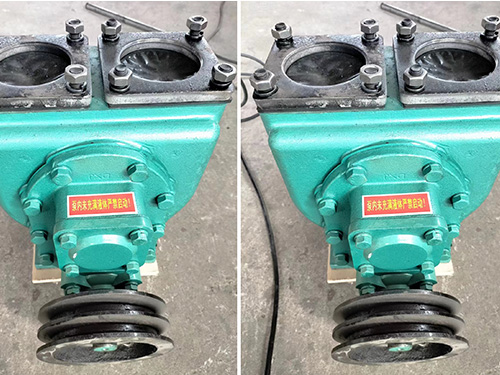
The YHCB high flow pump has the characteristics of large flow rate, high head, small settli...
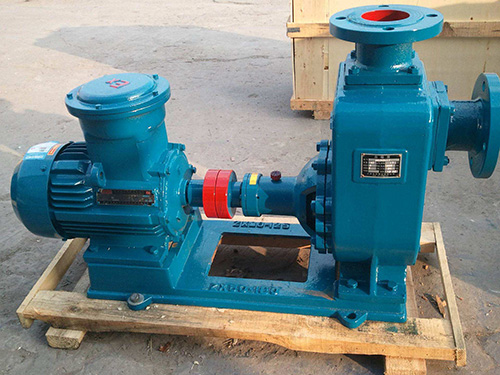
The CYZ centrifugal pump adopts an axial return liquid pump body structure, which is compos...
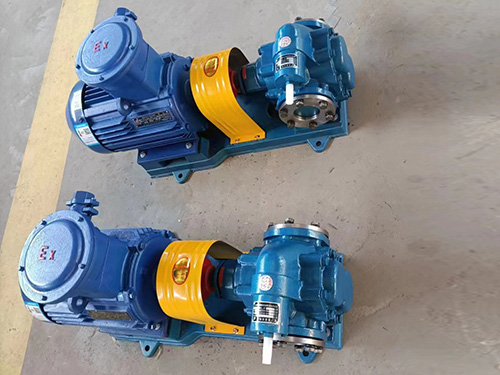
Copper gear pump (KCB type) is suitable for conveying lubricating oil or other liquids with...
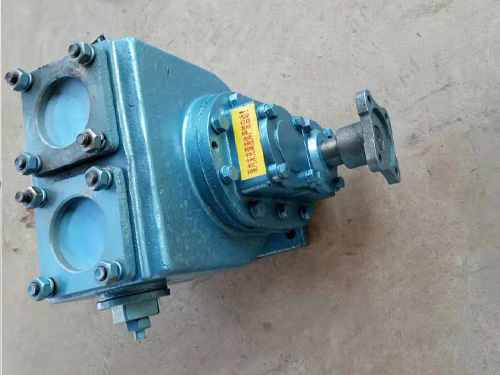
The car mounted circular arc gear pump can be installed on the car and driven by the output...